Featured post
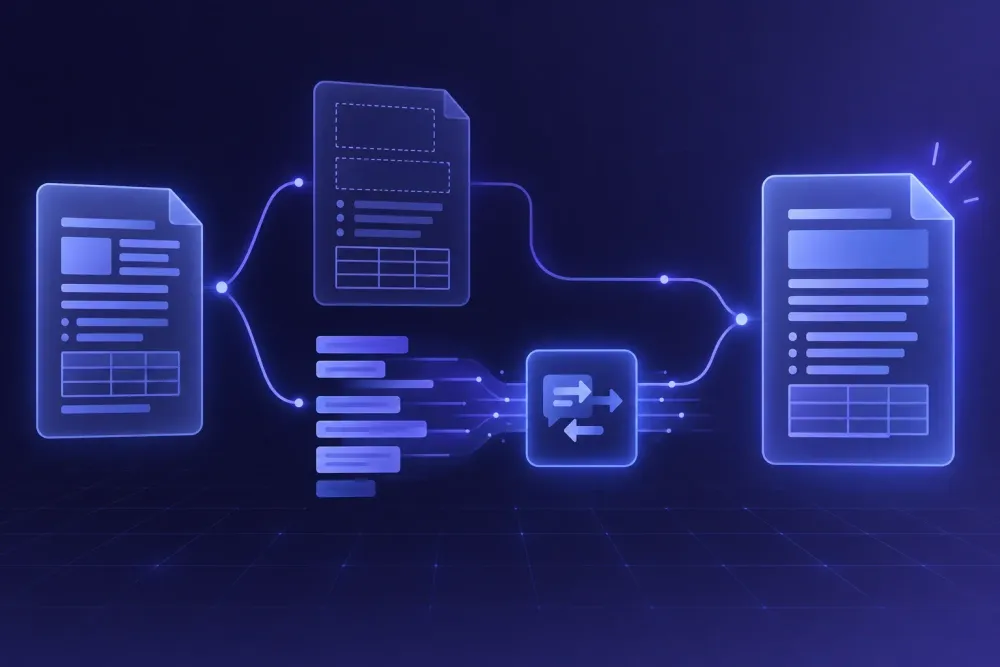
How SnapIntel preserves DOCX formatting during AI translation
How SnapIntel DOCX formatting preservation works: text is separated from structure at import, so your Word layout gets reused instead of regenerated.
SnapIntel Blog
Product updates, implementation guides, and operational lessons from building SnapIntel for real document translation work.
Page 1 of 8
Featured post
How SnapIntel DOCX formatting preservation works: text is separated from structure at import, so your Word layout gets reused instead of regenerated.
Translation memory vs glossary: what each one stores, where each one fails, how to settle conflicts, and which to build first if you have neither.
How to quote a translation job in under 15 minutes: the questions to ask, an honest word count, and a rate card that does the arithmetic for you.
How to translate an Excel spreadsheet accurately: column context, a do-not-translate list, the locale layer, and the checks that catch a broken workbook.
A DeepL document translation review focused on files: what DOCX, XLSX, PPTX and PDF really come back as, the limits that bite, and when you need more.
CAT tool pre-translation saves a review pass on some files and costs you one on others. How to read the analysis report and set the threshold per project.
Translate training presentation decks for international teams: what to scope, why speaker notes get skipped, and who should review before rollout.
Light vs full post-editing explained: how to pick the right MTPE level, write instructions editors can follow, price each level, and verify what you got.
Multi-engine translation routing sounds obvious and is harder than it looks: how to decide which engine handles which language pair, and when not to bother.
How to translate a resume to English without wrecking the layout: which file to start from, what to leave alone, and how to check the result before you apply.
The best AI model for document translation is rarely the whole story. What changes when GPT, Claude and Gemini run the same files, and how to test it.
Patent translation needs legal technical accuracy, not fluency. What changes in the claims, how terminology gets locked, and what a bad rendering costs.
DOCX vs PDF translation compared: why an editable source beats a PDF export, when OCR is worth the trouble, and how to get the right file from a client.
How to translate a product catalog in Excel without retyping cells: column rules, glossary first, and the checks that catch a broken import before it ships.
A client sent a PDF instead of the slides? Here is how to translate PDF to PowerPoint, rebuild an editable deck, and avoid clipped text on delivery.
Who owns translation memory when an agency, a freelancer and a client all built it? How to settle TM rights, access and handover in the contract.
Translate a business proposal without losing the deal: what to lock down in pricing, terms and validity dates, plus a review pass that catches costly errors.
Translate PowerPoint Arabic RTL decks without broken slides: what mirrors, what doesn't, plus fonts, numerals, and a slide-by-slide review pass.
What a Trados package SDLPPX contains, how SDLRPX return packages work, and how to hand files between agencies and translators without losing work.
How to use Claude for translation in real projects: prompt structure, glossary control, chunking long documents, and the review checks to run before delivery.
The SnapIntel neutral XLSX export hands you a source and target spreadsheet after every job. Here is how to move it into Trados, memoQ, or Phrase.
How to translate a document yourself: a practical six-step guide for non-translators covering file prep, glossaries, tools and quality checks.
Gisting translation is enough for most internal business documents. Here's how to tell which documents need publication quality and which don't.
We compare the best Excel translation tools in 2026 for business and agency workflows: what breaks XLSX files, what to test, and how to choose.
A translation agency SOP that survives staff turnover: what to write down, how to make people use it, and how to keep it from going stale.
Newsletter
We send occasional product notes and workflow essays when there is something worth reading.
Need the product walkthrough instead? Read the docs.